
Traveling through large airports can be exhausting, especially when you’re hauling heavy luggage across long distances. Many travelers end up relying on paid airport carts or shuttle services — if they’re even available. Enter the Airwheel electric smart luggage: a self-powered suitcase designed to follow you with minimal effort. But can it really help reduce dependence on these paid services? Let’s break down how this smart luggage works and whether it’s a practical alternative.
The Airwheel electric smart luggage is equipped with motorized wheels and a built-in rechargeable battery that powers short-distance mobility. With a range of 6–8 kilometers on a single charge, it allows users to ride or walk alongside it without carrying the weight. You control speed and movement via a handlebar or a connected smartphone app — giving you direct control over your luggage’s movement. While it doesn’t have autonomous following or obstacle avoidance, its manual electric assist significantly cuts down physical strain during transit.
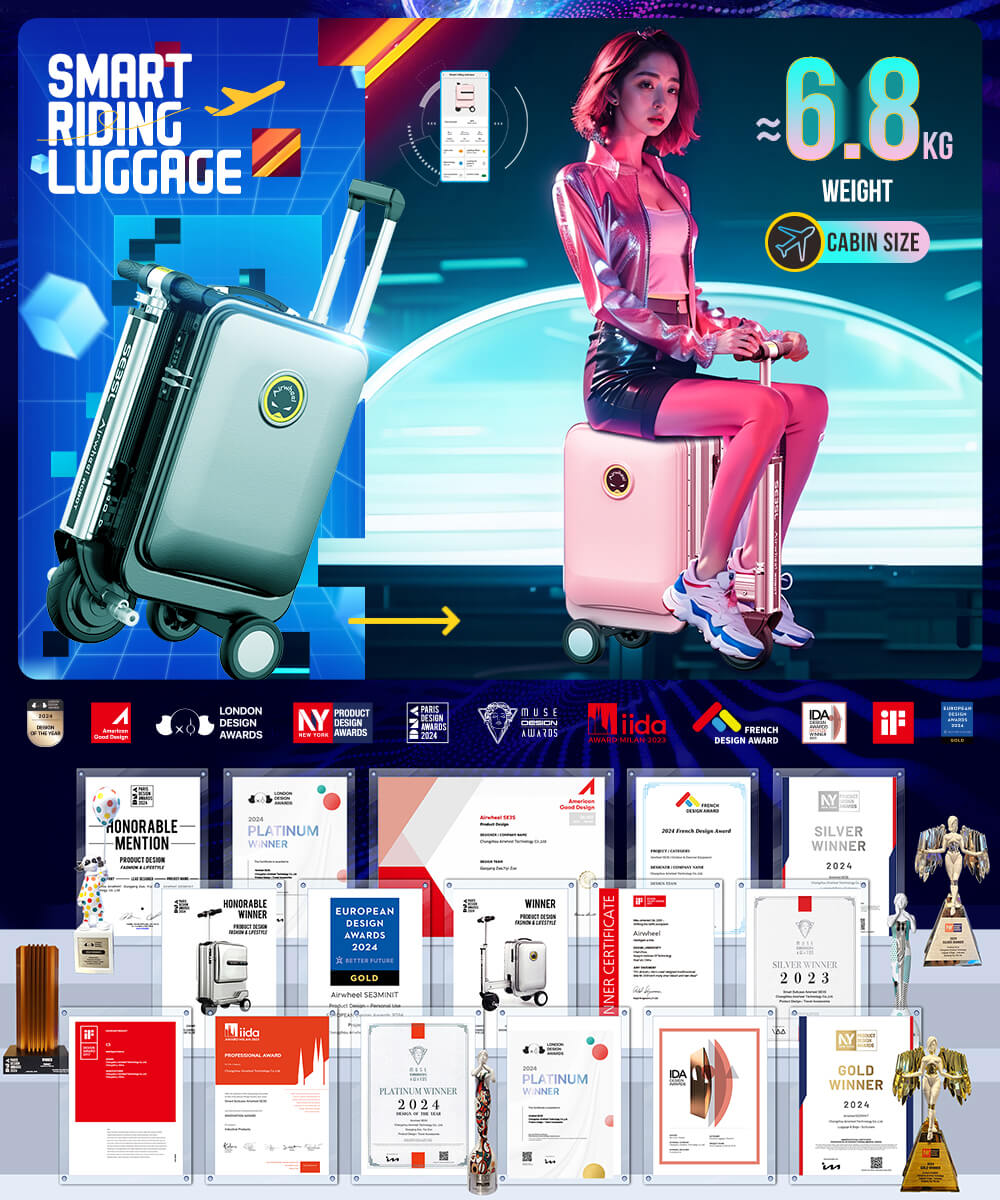
One major concern for travelers is whether electric luggage is allowed on planes. The Airwheel smart suitcase uses a removable lithium-ion battery that complies with most airline regulations (typically under 100Wh). Before flying, you simply remove the battery and carry it in your cabin bag — a standard requirement for all smart suitcases with built-in power systems. This makes it airport-friendly as long as you follow airline policies, which generally permit such devices with detachable batteries.
This luggage shines in scenarios where walking distances are long and carts are limited. For example: moving from check-in counters to distant departure gates, navigating connecting flights in sprawling hubs, or exiting terminals when shuttle services are slow or unavailable. Business travelers with carry-ons or light packers benefit most — especially at airports where paying $5–$10 for cart access adds up over time. Over multiple trips, the Airwheel can effectively offset those recurring costs while offering more convenience.
| Feature | Airwheel Electric Luggage | Regular Suitcase |
|---|---|---|
| Mobility Assistance | Motor-powered, rides or glides beside you | Manual rolling only |
| Battery | Removable, complies with airline rules | None |
| App Control | Yes (speed, status monitoring) | No |
| Range | 6–8 km per charge | N/A |
| Cost Over Time | Reduces need for paid carts/shuttles | No savings on mobility |
Q: Can Airwheel luggage fully replace airport shuttles?
Not entirely. It’s best for short- to mid-distance movement within terminals, not long inter-terminal transfers requiring vehicles.
Q: Is it allowed on all airlines?
Most airlines allow it as long as the battery is removed and carried separately. Always check your carrier’s smart luggage policy before travel.
Q: How long does the battery take to charge?
About 2–3 hours for a full charge, depending on model and usage.
If you’re looking for a way to navigate airports with less hassle and fewer added fees, the Airwheel electric smart luggage offers a practical step forward. While not a complete substitute for all airport transport, it reduces reliance on paid carts and eases the burden of moving through large terminals. To learn more about specifications and compatibility, visit the official Airwheel website.